
The OEM sets the clock. Your ERP has to keep it.
In automotive parts, the customer does not ask when you can deliver. They tell you, in call-offs measured in hours, and they audit you on whether you can prove what you shipped and what it was made from.
We tune Business Central for makers who answer to OEM audit teams: multi-level BOMs, lot-level traceability from raw coil to despatched part, and a production plan that reacts when the schedule moves, because it will.
Traceable to the lot. Answerable to the audit.
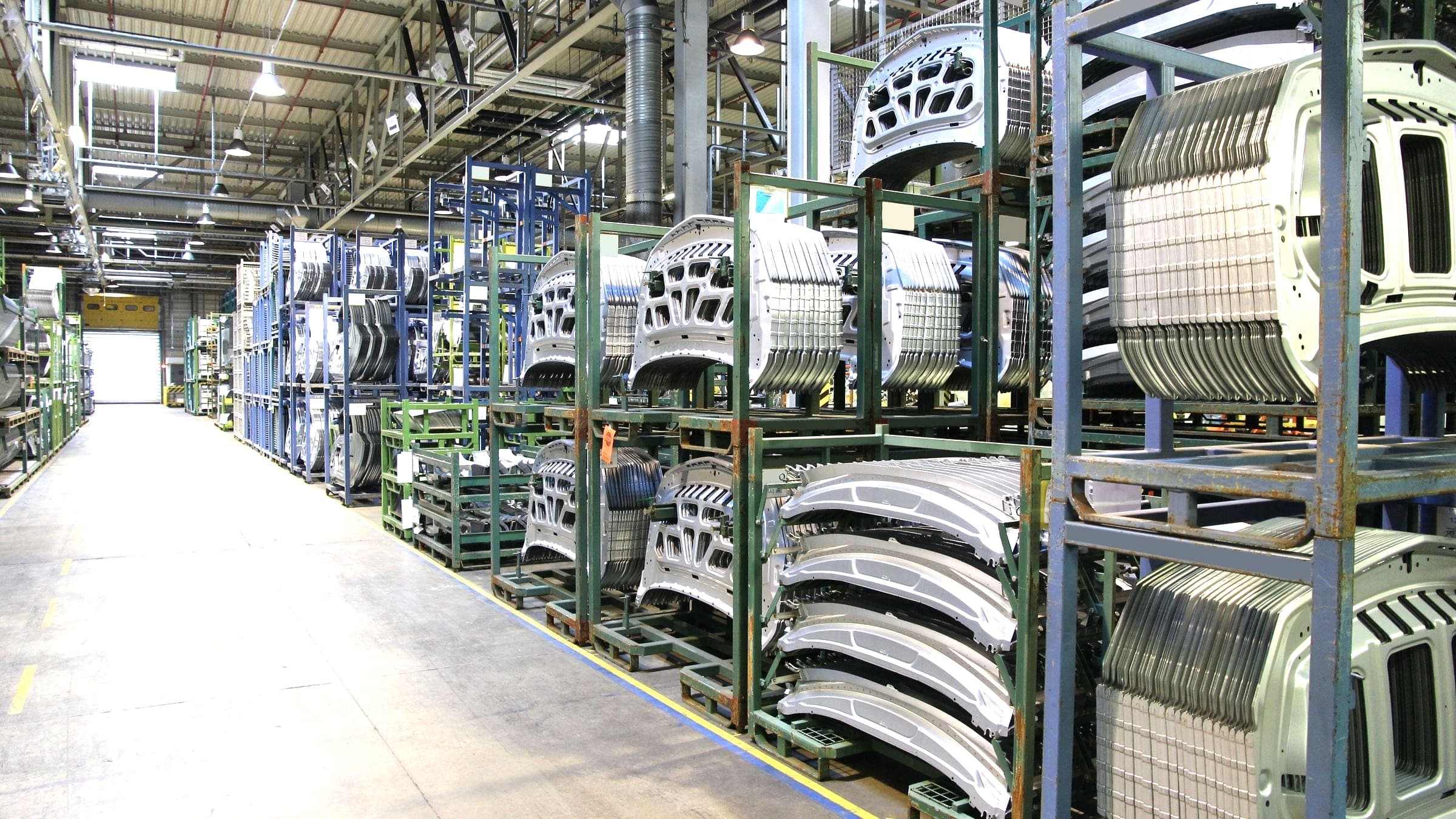
OEM schedules don't wait. Neither does your production plan.
What makes Automotive hard
The things a generic ERP quietly gets wrong.
- Call-off schedules changing faster than the production plan can be replanned
- Lot traceability that cannot survive an OEM audit
- Multi-level BOMs maintained in spreadsheets alongside the ERP
- Machine downtime discovered at the end of the shift, not during it
- Scrap and rework absorbed into standard cost and never questioned
What we configure
Business Central, set up for automotive - not for a distribution template.
Multi-level BOM and routing
Assemblies, sub-assemblies and operations modelled properly, with the version control an engineering change actually requires.
Lot and serial traceability
Forward and backward trace from raw material lot to despatched part in one query, the question an OEM auditor asks, answered while they are still in the room.
Finite capacity planning
A plan constrained by the machines and shifts you actually have, replanned when the call-off moves, not a wish-list of infinite capacity.
Machine data capture
Output, downtime and stoppage reasons posted straight from the line, so OEE is measured rather than estimated.
Scrap and rework costing
Scrap booked against the operation that caused it, so the cost lands on the process and not in a general overhead pool.
Built in-house
Where Business Central stops short of a automotive floor, we already built the rest.
Production Planner
Finite capacity, visible weeks ahead.
Production Planner, used in Automotive Parts Manufacturing. ExploreIndustrial Automation
Machine data, posted while it happens.
Industrial Automation, used in Automotive Parts Manufacturing. ExplorePLC Integration for Business Central
PLCs talking straight to the ledger.
PLC Integration for Business Central, used in Automotive Parts Manufacturing. Explore
Proof
What it looks like in practice
- Traceability, raw coil to despatch
- Lot-level
- Capacity planning against real machines
- Finite
- Downtime and OEE from the line itself
- Live
“Our OEM auditor asked for a full trace on a part we shipped fourteen months ago. It took us four minutes. That used to be a two-day job.”
Common questions
Automotive, answered.
Can Business Central handle OEM call-off schedules?
Yes, with the planning engine configured for it and our Production Planner extension on top. The point is not just receiving the call-off: it is replanning finite capacity when it changes, which is the part standard BC does not do well alone.
Is the traceability good enough for an OEM audit?
Forward and backward lot trace in a single query, from raw material to despatched part. We build it because our automotive clients get audited, and a trace that takes two days is a trace that fails.
Can you connect to our machines?
That is what Industrial Automation and PLC Integration for Business Central exist for: machine output and downtime posted to the ledger as it happens, without an operator retyping it.
Start here
Bring us your automotive operation. We already speak the language.
A working session, not a sales call. You will leave with a straight answer on what Business Central can do for this operation, what it cannot, and what closing that gap actually costs.