
One stock figure. Trusted by the till and the warehouse alike.
Most retail ERP problems are really one problem wearing different hats: the number on the shelf, the number in the warehouse, and the number in the ledger do not agree, so nobody fully trusts any of them.
We put POS, replenishment and the ledger on one stock truth, so a stock-out is an exception that gets investigated, not a Tuesday.
Stock-outs become exceptions, not the weather.
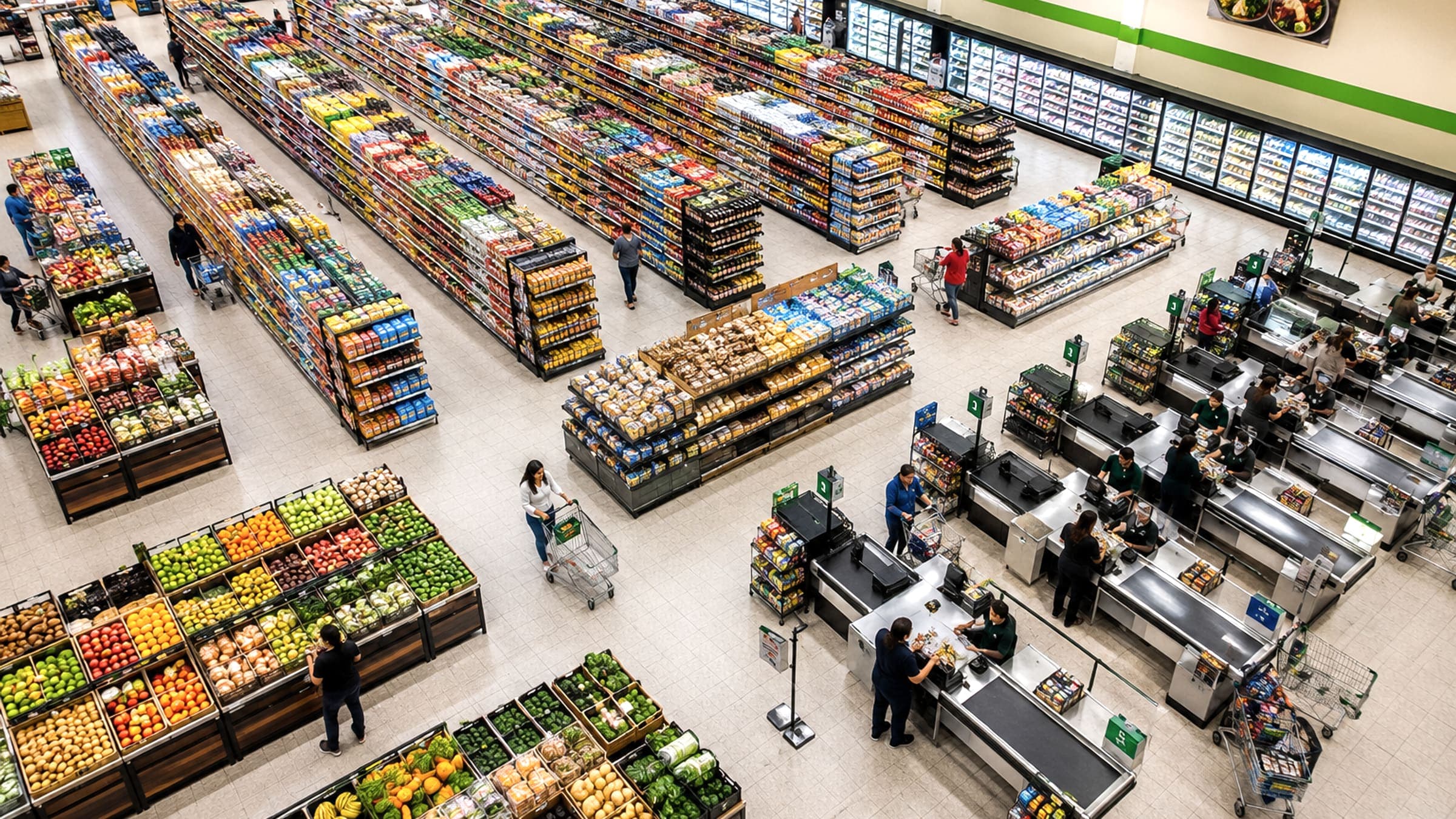
Every store, every SKU, one stock truth from till to warehouse.
What makes Retail hard
The things a generic ERP quietly gets wrong.
- Store stock, warehouse stock and the ledger disagreeing on the same SKU
- Replenishment driven by a buyer's instinct and last week's spreadsheet
- Overstock discovered at markdown time, when the margin is already gone
- Each store closing its own day and reconciling to head office by email
- Promotions priced at the till but never costed against margin
What we configure
Business Central, set up for retail - not for a distribution template.
POS integration
Tills posting to the ledger continuously, so the day's sales are a fact in the system rather than a file someone remembers to upload.
Automated replenishment
Reorder points and quantities driven by actual movement per store, not by a buyer's memory of last season.
Multi-store stock visibility
One stock position across every store and warehouse, so a sale is not lost because the SKU was three kilometres away and invisible.
Promotions and margin
Promotional pricing applied at the till and costed against margin at the same time, so you find out during the promotion, not after it.
Store-to-ledger close
Each store's day closes into the group ledger without an email, a spreadsheet or a reconciliation call.
Built in-house
Where Business Central stops short of a retail floor, we already built the rest.
Proof
What it looks like in practice
- Stock truth across till, warehouse and ledger
- One
- Multi-store visibility on every SKU
- Live
- Continents of retail delivery experience
- 4
“We stopped arguing about whose number was right. There is one number now, and the arguments moved on to what we should do about it.”
Common questions
Retail, answered.
Does this work with our existing POS?
If it has a supported API, yes: the till posts to Business Central rather than exporting a file someone has to import. Where a POS has no API, we will tell you that before you buy, not after.
Can it handle multiple stores and one warehouse?
That is the common case. Every location holds its own stock position under one ledger, so a transfer is a transaction and not a phone call.
How does replenishment decide what to order?
Actual movement per SKU per location, against reorder points you set and can override. It is a proposal you approve, not a black box that orders on your behalf.
Start here
Bring us your retail operation. We already speak the language.
A working session, not a sales call. You will leave with a straight answer on what Business Central can do for this operation, what it cannot, and what closing that gap actually costs.